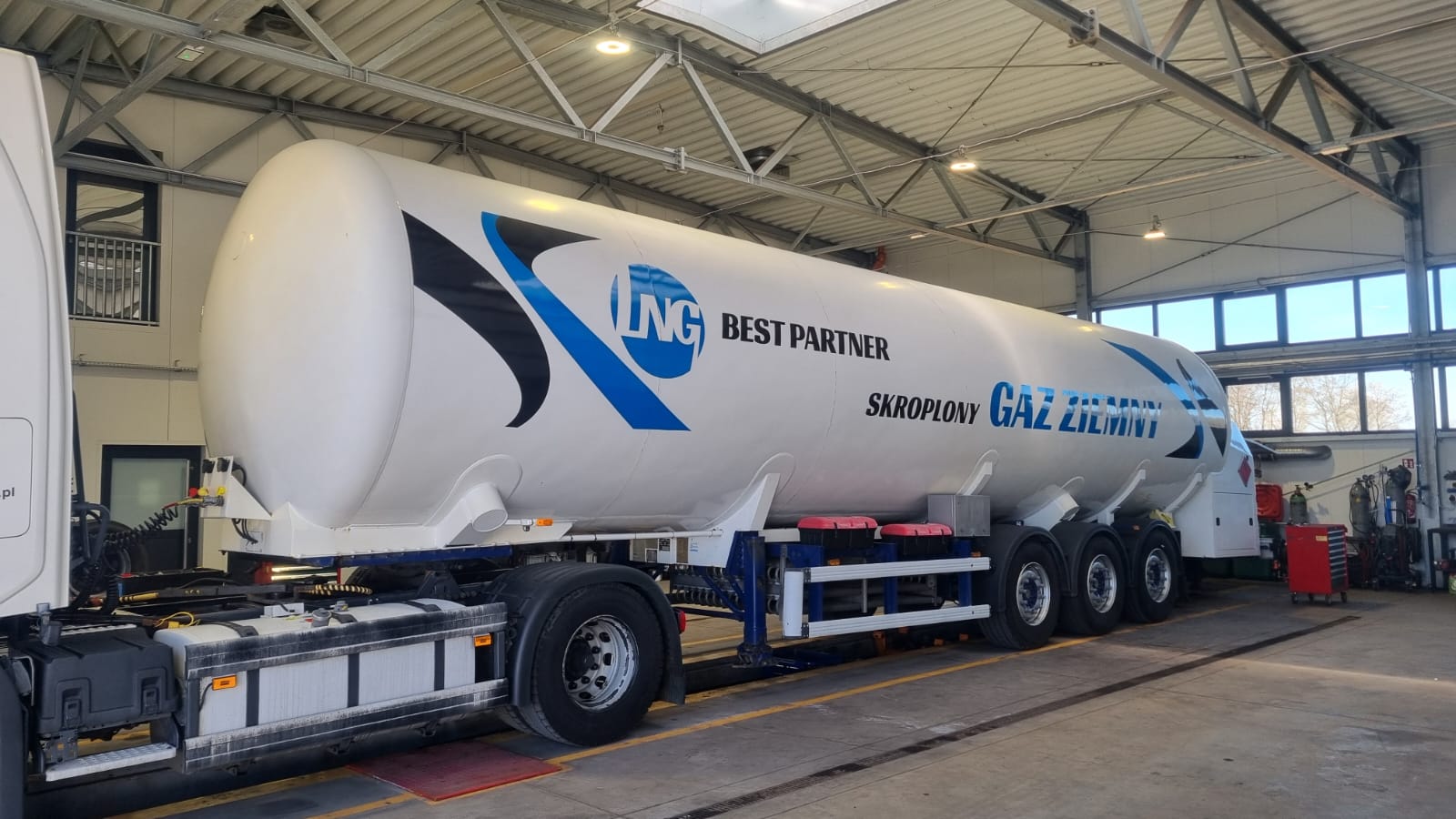
Road Safety Starts in the Workshop
The transport of liquefied natural gas is a responsibility that doesn’t end when the vehicle leaves the yard. It begins much earlier — at the service bay, during the daily inspection, and at every scheduled technical review. This systematic approach to maintaining cryogenic tankers is the guarantee that our vehicles reach customers without delays and without compromising on safety.
Safety as an Operational Priority
A cryogenic tanker operates under demanding conditions: cryogenic temperatures, working pressures, hundreds of kilometres every week. In such an environment, any fault — however seemingly minor — can have consequences. That is why we don’t wait for failures. We act before they occur.
Continuous monitoring of our own fleet’s technical condition is one of the pillars of our safety policy. This encompasses both scheduled service inspections carried out by our in-house workshop and daily pre-departure driver checks.
The Driver’s Role in Tanker Maintenance
The driver is the first line of technical control. We place great emphasis on ensuring that every departure is preceded by a thorough check of the trailer’s condition: braking systems, cryogenic installations, valves, lighting and connections. This is not a formality — it is an element of our safety culture that has a real impact on the fleet’s technical condition.
The Result: Punctuality and Predictability
Regular inspections and swift responses to any deviations mean our vehicles rarely fall behind schedule. For customers, this means one thing: deliveries carried out reliably, consistently and on time — regardless of season or weather conditions.
Reliability is not the product of chance. It is the result of daily work — visible and less visible, carried out behind the closed doors of the workshop.